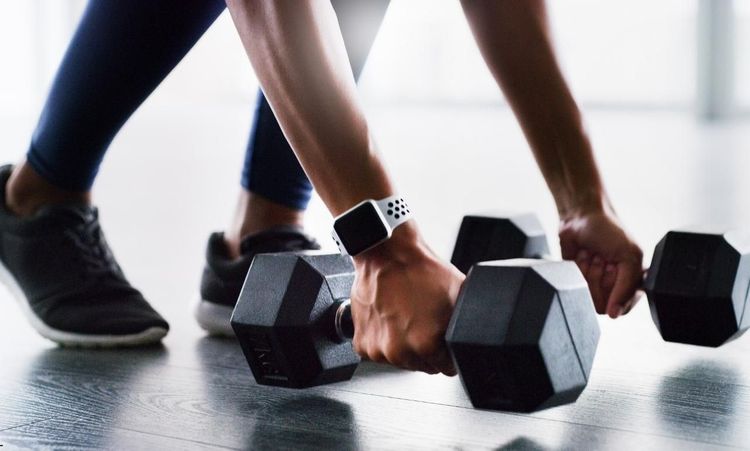
Many people leave the gym expecting to feel sore the next day. If they don't, they often assume the workout wasn't effective. It's a common belief, especially among beginners, that muscle soreness is proof of progress. In reality, the relationship between soreness and strength is far more complicated.
The short answer is yes. You can get stronger without feeling sore. In fact, many experienced athletes and long-term lifters make consistent progress while experiencing little or no soreness after most workouts.
Why Muscle Soreness Happens in the First Place
Before understanding why soreness isn't necessary for strength gains, it helps to know what causes it.
The soreness that appears several hours after exercise is known as delayed onset muscle soreness, or DOMS. It usually develops between 12 and 24 hours after a workout and can last several days.
DOMS often occurs when your muscles experience a new challenge. This may happen when you start exercising for the first time, return after a long break, increase training volume, or perform unfamiliar movements.
Small amounts of muscle damage, inflammation, and changes within muscle fibers contribute to this feeling of soreness. However, soreness is simply one response to training. It is not the goal of training itself.
What Causes Delayed Onset Muscle Soreness?
Several factors can trigger DOMS:
- Introducing new exercises
- Increasing workout intensity
- Performing more repetitions than usual
- Emphasizing eccentric movements
- Returning to training after time away
Eccentric exercises deserve special attention. These movements occur when a muscle lengthens under tension. Lowering a dumbbell during a bicep curl or descending during a squat are common examples.
These actions tend to create more soreness than other types of muscle contractions.
Can You Get Stronger Without Feeling Sore?
The answer is an unequivocal yes.
Strength gains come from adaptations within your muscles and nervous system. While soreness may sometimes accompany these adaptations, it is not required for them to occur.
When you train consistently, your body becomes more efficient at recruiting muscle fibers. Your nervous system improves communication with your muscles. Coordination improves. Movement patterns become more refined.
These changes help you lift heavier weights and produce more force, even if you never experience significant soreness.
Many elite powerlifters, Olympic weightlifters, and professional athletes rarely feel intensely sore after routine training sessions. Yet they continue to get stronger year after year.
Strength Is Built Through Adaptation
Your body responds to training stress by adapting.
When you gradually increase demands through progressive overload, your body learns to handle greater challenges. This adaptation process is what drives strength development.
The key factors include:
- Progressive overload
- Consistent training
- Adequate recovery
- Proper nutrition
- Quality sleep
None of these require soreness to be effective.
Why Soreness Is a Poor Indicator of Progress
Many people use soreness as a scorecard for workout quality. The logic seems simple: if muscles hurt, they must be growing or getting stronger.
Research and practical experience suggest otherwise.
Soreness often reflects how unfamiliar a workout was rather than how productive it was. A completely new exercise can leave you extremely sore even if it isn't especially effective for building strength.
On the other hand, a well-designed training program may produce minimal soreness while delivering excellent results.
Imagine two people.
One performs random exercises every week and feels sore constantly.
The other follows a structured strength program and rarely experiences soreness.
After six months, the second person often makes significantly more progress because consistency matters more than soreness.
The Problem With Chasing Soreness
Seeking soreness as a goal can create several issues.
First, it may encourage unnecessary exercise variation. People constantly switch workouts because they believe soreness equals effectiveness.
Second, excessive soreness can interfere with recovery. If muscles remain painfully sore for days, training quality often suffers.
Finally, it can distract from more meaningful performance measures such as strength, endurance, and skill development.
Muscle Growth and Muscle Soreness Are Not the Same Thing
One of the most persistent fitness myths is that muscle growth requires soreness.
The evidence doesn't support this belief.
Muscle growth, known as hypertrophy, occurs primarily through mechanical tension placed on muscle fibers. While muscle damage may play a small role, it is not the primary driver.
Your muscles can grow without experiencing significant soreness.
This becomes particularly evident among experienced lifters. As training age increases, the body becomes more resilient. Soreness decreases, yet muscle growth can continue.
What Actually Stimulates Muscle Growth?
Three factors are commonly associated with hypertrophy:
- Mechanical tension
- Metabolic stress
- Muscle damage
Of these factors, mechanical tension appears to be the most important.
When muscles work against resistance and gradually face greater demands over time, growth can occur even without substantial soreness.
This explains why many effective training programs focus on progression rather than muscle destruction.
Why You May Stop Feeling Sore After Workouts
Many people become concerned when soreness suddenly disappears.
In most cases, this is actually a positive sign.
Your body adapts remarkably well to repeated training. Scientists call this the repeated bout effect.
After performing a movement several times, muscles become more resistant to damage from that same activity. As a result, soreness decreases even when training remains effective.
This adaptation helps athletes train consistently without being limited by constant discomfort.
Better Recovery Can Reduce Soreness
Several lifestyle improvements can also reduce soreness:
- Improved sleep quality
- Better nutrition
- Increased protein intake
- Proper hydration
- Stress management
These factors enhance recovery and help the body respond more efficiently to training demands.
Less soreness doesn't necessarily mean less progress. Often, it means your recovery systems are functioning well.
Signs You're Getting Stronger Even Without Soreness
If soreness isn't a reliable measure of progress, what should you track instead?
Strength improvements reveal themselves through measurable performance changes.
One of the clearest signs is lifting heavier weights than before. Another is performing more repetitions with the same weight.
Improved workout performance often appears long before physical changes become visible.
You may also notice that everyday activities become easier. Carrying groceries, climbing stairs, or moving furniture may require less effort than before.
Better Indicators of Progress
Look for signs such as:
- Increased training loads
- More repetitions completed
- Faster recovery between sessions
- Improved exercise technique
- Greater work capacity
- Enhanced athletic performance
These metrics provide far more useful information than soreness levels.
Does Feeling Sore Mean You Had a Good Workout?
Not necessarily.
Soreness can indicate that muscles experienced an unfamiliar stimulus, but it doesn't automatically mean the workout was effective.
Likewise, the absence of soreness doesn't mean the workout failed.
A productive workout creates a stimulus that encourages adaptation while allowing recovery. Sometimes that process includes soreness. Sometimes it doesn't.
The best training programs focus on long-term progression rather than short-term discomfort.
When Soreness Can Be Useful
Moderate soreness occasionally provides useful feedback.
For example, it may indicate that a new exercise successfully targeted a specific muscle group.
However, soreness should be viewed as supplementary information rather than a primary measure of success.
Common Reasons People Struggle to Get Stronger
If strength gains have stalled, soreness is rarely the problem.
More often, the issue involves one of several common obstacles.
Insufficient training intensity can limit progress. Some people never challenge their muscles enough to stimulate adaptation.
Poor recovery is another major factor. Strength improvements occur during recovery, not during the workout itself.
Nutrition also matters. Inadequate protein intake can impair muscle repair and growth.
Sleep deprivation further reduces recovery capacity and training performance.
Small Problems Often Add Up
A person who trains hard but sleeps poorly, eats inconsistently, and misses workouts will struggle to make progress.
Meanwhile, someone with a balanced approach often sees steady improvements without experiencing dramatic soreness.
How to Build Strength Without Excessive Soreness
The goal of training should be adaptation, not suffering.
A smart strength-building approach focuses on gradual progression while maintaining recovery.
Choose a structured training plan and stick with it long enough to allow meaningful adaptation. Resist the urge to constantly change exercises simply to create soreness.
Prioritize compound movements such as squats, deadlifts, presses, and rows. These exercises provide substantial strength benefits while allowing measurable progression.
Pay attention to recovery habits as carefully as training habits.
Recovery Supports Performance
To maximize strength gains:
- Sleep seven to nine hours per night
- Consume adequate protein
- Stay hydrated
- Manage training volume appropriately
- Allow sufficient recovery between sessions
These habits support long-term progress far more effectively than chasing soreness.
The Bottom Line on Strength and Soreness
Can you get stronger without feeling sore? Absolutely.
Soreness is simply one possible response to exercise. It is not a requirement for strength gains, muscle growth, or athletic improvement. Many successful athletes rarely experience significant soreness because their bodies have adapted to consistent training.
The most reliable signs of progress are increased strength, improved performance, better recovery, and gradual physical development. Instead of judging workouts by how much they hurt the next day, focus on measurable improvements over weeks and months.
Strength is built through progressive overload, consistency, and recovery. Soreness may occasionally appear along the way, but it should never be mistaken for the goal.